
Recent Post

Best Portable Pull Up Bar Guide: Top Picks and Buying Tips

Compact Home Gym Ideas: Space‑Saving Solutions for Every Apartment

Is whey isolate dairy free? A clear guide to understanding whey protein and dairy concerns

How to Choose Adjustable Dumbbells: A Practical Step‑by‑Step Guide

Lactose Free Whey Isolate Protein Powder: Complete Guide to Choosing, Using, and Benefits

20 minute dumbbell workout for beginners: Simple Full‑Body Routine
Laisser un commentaire
Best Portable Pull Up Bar Guide: Top Picks and Buying Tips
Ever walked into a hotel gym, stared at the bulky pull‑up bar, and thought, “There’s got to be a way to train my lats without lugging a whole rack?” You're not alone. That moment of frustration is the spark behind the hunt for the best portable pull up bar.
In our experience, the sweet spot is a bar that balances grip variety, weight capacity, and a footprint that fits in a suitcase. Take Sarah, a personal trainer who hops between client homes in Toronto. She swears by a foldable steel bar that locks onto any doorway and still holds 300 lb – enough for her own weighted pull‑ups and her clients’ body‑weight work. She tells us she once set it up in a cramped office break room, and the whole team got a quick 5‑minute circuit in before lunch.
But it isn’t just trainers. Rehab specialists often need a gentle, adjustable option for patients recovering from shoulder surgery. A telescoping model with padded grips lets them start with assisted chin‑ups using resistance bands, then progress as strength returns. One physiotherapist shared that a client moved from a 30‑second assisted hold to a full rep in three weeks – all thanks to a bar that could be lowered to the floor for safe foot‑on‑ground support.
So, how do you pick the right one? Here are three actionable steps:
1️⃣ Measure your doorway or wall‑mount space. Most portable bars need a clear 30‑inch width and a sturdy frame; if you’re in a rental, double‑check the lease for any mounting restrictions.
2️⃣ Check the weight rating and grip options. Look for knurled steel or rubberized handles if you sweat a lot – they’ll keep your hands from slipping.
3️⃣ Test the setup time. Ideally you should be able to assemble, test stability, and start your set in under two minutes. Anything longer starts to feel like a chore.
Once you’ve narrowed the field, browse our curated collection of small portable fitness equipment. We’ve grouped bars by door‑type, weight capacity, and price, so you can compare side‑by‑side without endless scrolling.
And remember, a solid workout is only half the equation. Pairing your pull‑up routine with proper nutrition amplifies results. That’s why we recommend checking out an AI calorie counter app to track macros and ensure you’re fueling those muscles.
Ready to ditch the gym‑floor hassle and bring strength training wherever you go? Let’s dive into the top picks and see which portable pull‑up bar earns the crown.
TL;DR
If you’re chasing the best portable pull‑up bar, we break down grip options, weight limits, and lightning‑fast setup today so you can train anywhere, anytime.
Follow our three quick steps—measure your space, check capacity, and test assembly time—to pick a bar that fits your routine and keeps workouts easily hassle‑free.
Best Portable Pull Up Bar #1: Doorway Model Overview
Picture this: you’re in a tiny hotel room, the doorframe is the only thing standing between you and a solid pull‑up session. That’s the sweet spot we’re talking about with the doorway‑mount model – the best portable pull up bar for anyone who can’t guarantee a permanent home‑gym.
In our experience, the door‑frame bar shines because it’s literally a few inches away from where you already stand. No bolts, no wall‑mounts, just a sturdy steel frame that slides onto a standard 28‑32 inch opening and locks in place with tension rods.
Why the door‑frame design wins
First, set‑up time is almost instantaneous. You pull the bar out, line it up with the top of the frame, give the tension levers a firm push, and you’re ready to go – usually under 30 seconds. That’s faster than you can brew a cup of coffee.
Second, the grip options are versatile. Most models offer a knurled steel side for a solid hold and a padded rubber side that’s kinder on sweaty palms. If you’re a personal trainer hopping between client homes, that dual‑grip lets you switch from heavy weighted pull‑ups to lighter rehab work without swapping equipment.
And for rehab specialists, the door‑frame bar can be lowered to just a few inches off the floor. That means a patient can do assisted chin‑ups with a resistance band or even perform a “foot‑on‑ground” support hold while they rebuild shoulder stability.
Weight capacity and safety
Most top‑rated doorway bars are rated for 300 lb to 350 lb. That covers the vast majority of users, including those who add a dip belt. The key safety tip? Make sure the door frame is solid wood or metal – a flimsy hollow core door is a no‑go. A quick tap on the frame should feel firm, not echoing.
One of our customers, a physiotherapist in Vancouver, swears by the 320 lb capacity when working with post‑surgery patients. She says the bar’s “quiet lock‑in” gives her confidence that the equipment won’t shift mid‑rep.
Thinking about gifts for someone in recovery? A doorway pull‑up bar is surprisingly thoughtful – it lets them keep strength work at home without a permanent install. Check out this guide on thoughtful recovery gifts for more ideas.
Now, let’s see the bar in action.
Notice how the tension levers snap into place with just a firm pull. That’s the kind of reliability you need when you’re juggling a busy schedule – you don’t have time for wobble.
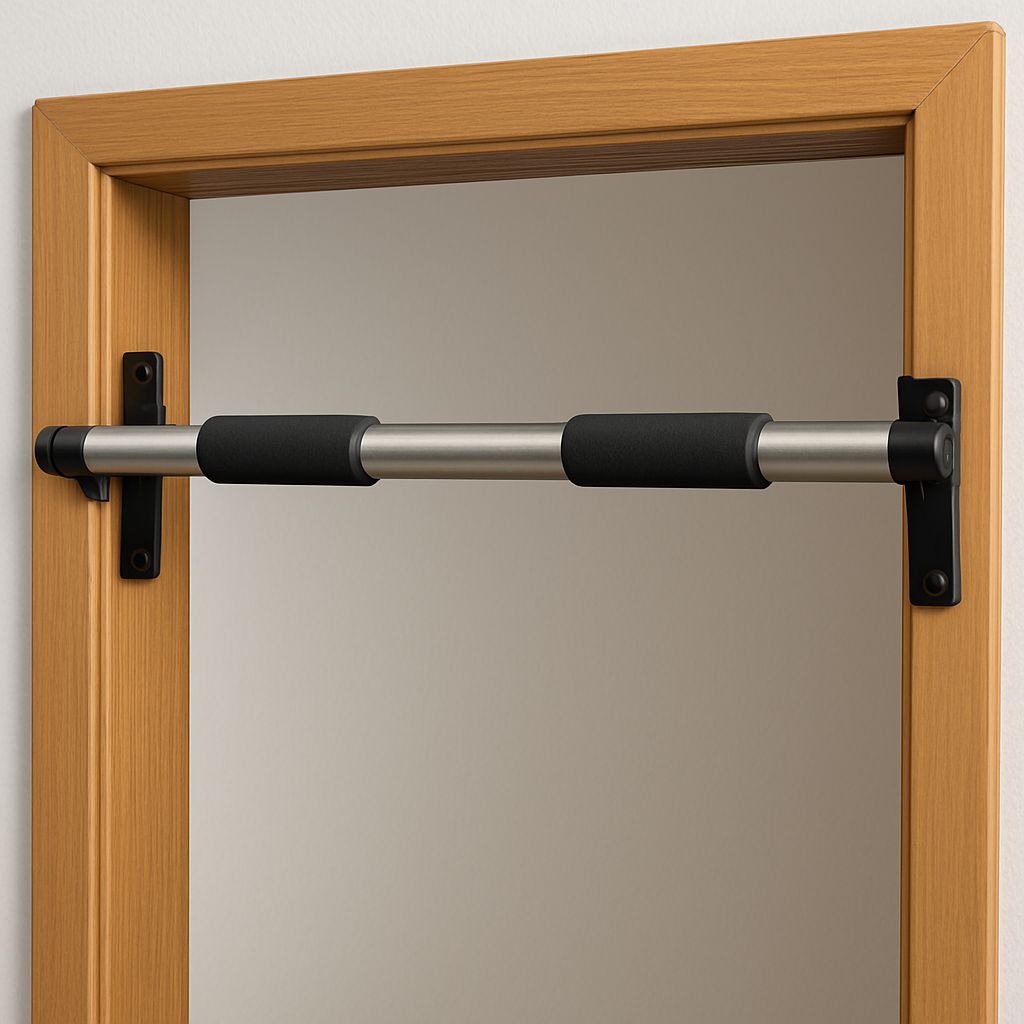
Beyond the hardware, there are a few practical tips to get the most out of your door‑frame bar:
- Measure twice – the bar needs a clear 30‑inch width and at least 2 inches of clearance above the frame.
- Use a non‑slip pad or a small towel under the tension rods if you have a polished door surface.
- Test the lock by giving the bar a gentle wiggle before you start your set.
And if you ever wonder where to grab a good post‑workout caffeine fix, we’ve found a quirky spot that many of our Canadian members love – Chilled Iguana Coffee Co.. A solid espresso can be the perfect finish after a quick 5‑minute circuit.
So, does the doorway model feel like the right fit for your nomadic training lifestyle? If you value speed, versatility, and a low‑profile footprint, it’s hard to argue against it. Grab one, give it a test run in a doorway, and you’ll see why it’s often crowned the best portable pull up bar for on‑the‑go athletes.
Best Portable Pull Up Bar #2: Freestanding Model Overview
When you can't lean on a doorframe – whether you're in a rented condo, a gym with no door, or simply hate the idea of scratching paint – a freestanding pull‑up bar becomes the go‑to solution. It’s the kind of equipment that feels like a small piece of a commercial gym, yet folds down to fit in a trunk.
Why a Freestanding Bar Might Be Your Sweet Spot
First off, you get true height freedom. No more worrying about ceiling height or door clearance; you set the bar wherever the floor can support it. That means you can raise it to 93 in for full‑range chin‑ups or drop it to 78 in for assisted rows without any permanent mounting.
Second, stability isn’t a myth. Modern freestanding designs use outriggers or a wide foot‑print to keep wobble to a minimum. The FitBar Pull Up Station, for example, boasts a 5’ × 10’ footprint and diagonal outriggers that keep the unit vertical even on uneven ground – perfect for outdoor parks or a garage floor.
Key Features to Look For
- Adjustable Height: Look for a range of at least 78–93 in, covering both low‑row work and high pull‑ups.
- Bar Diameter & Grip: A 1.25‑inch (≈3 cm) bar works for most hands, but a 2 – 2.5 in thick bar, like the BaseBar’s “fat” option, forces you to develop serious grip strength.
- Footprint & Portability: Aim for a unit that breaks down into three or four pieces and fits into a standard car trunk. The BaseBar collapses into three parts and can be assembled in under three minutes.
- Weight Capacity: Minimum 250 lb is a good baseline; many models rate 300 lb or more, which covers most weighted‑pull‑up scenarios.
- Ground Stability: Rubber feet or adjustable outriggers protect floors and keep the bar from tipping when you do dynamic moves.
Real‑World Examples From the Field
Take Maya, a physiotherapist in Vancouver who runs a small rehab studio. She swaps the BaseBar between her clinic and clients’ homes because the whole thing fits in a single duffel bag. For a shoulder‑recovery client, she sets the bar low, adds a resistance band, and the patient does assisted chin‑ups while keeping feet on the floor. Within three weeks the client graduates to full hangs – all without a permanent installation.
On the other side of town, Marco, a competitive calisthenics athlete, prefers the FitBar Station for his outdoor training sessions. The outriggers let him practice front‑lever progressions and even light kipping pull‑ups without the unit wobbling. He tells us the 60‑inch long bar gives him the extra grip width he needs for his “wide‑grip muscle‑up” drills.
Quick Setup Checklist (Under 5 Minutes)
- Lay out the components. Verify you have the two side legs, the main bar, and any bolts or click pins.
- Assemble the outriggers or leg frames. Snap the bolts in place – most models use a “grenade‑click” pin that locks with a simple push.
- Adjust the height. Slide the bar into the chosen holes (78 in for rows, 93 in for pull‑ups) and tighten the lock knobs.
- Secure the rubber feet. Press them onto the leg bases; they should sit flush and not wobble.
- Test stability. Pull down on the bar with about 50 lb of force; if there’s any sway, re‑tighten the pins.
- Start your set. Begin with a 20‑second dead hang, then move into your chosen rep scheme.
Expert Tips From FitCore Supply
We’ve seen that beginners often set the bar too high, forcing them to swing for momentum. Start low, use a step or sturdy chair for assistance, and only raise the bar once you can complete three clean reps.
Another pro tip: combine the freestanding bar with a portable dip attachment. The BaseBar’s U‑shaped frame accepts a dip strap, letting you get triceps work without buying a second piece of equipment.
Finally, keep a small mat under the foot‑print. It protects hardwood floors and adds a bit of friction, which can make the unit feel even more solid during explosive movements.
Bottom line: if you need a bar that travels as freely as your backpack, the freestanding model checks every box – adjustable height, solid grip options, and a footprint that fits in a car. Whether you’re a rehab specialist, a personal trainer, or just someone who wants to squeeze a quick circuit into the backyard, the best portable pull up bar for you might just be a freestanding unit.
Best Portable Pull Up Bar #3: Wall‑Mounted Foldable Model
Picture this: you’re staying at a boutique hotel, the ceiling is low, the doorframe is thin, but you still want to crush a set of chin‑ups before dinner. A wall‑mounted, foldable bar slides into that scenario like a secret weapon.
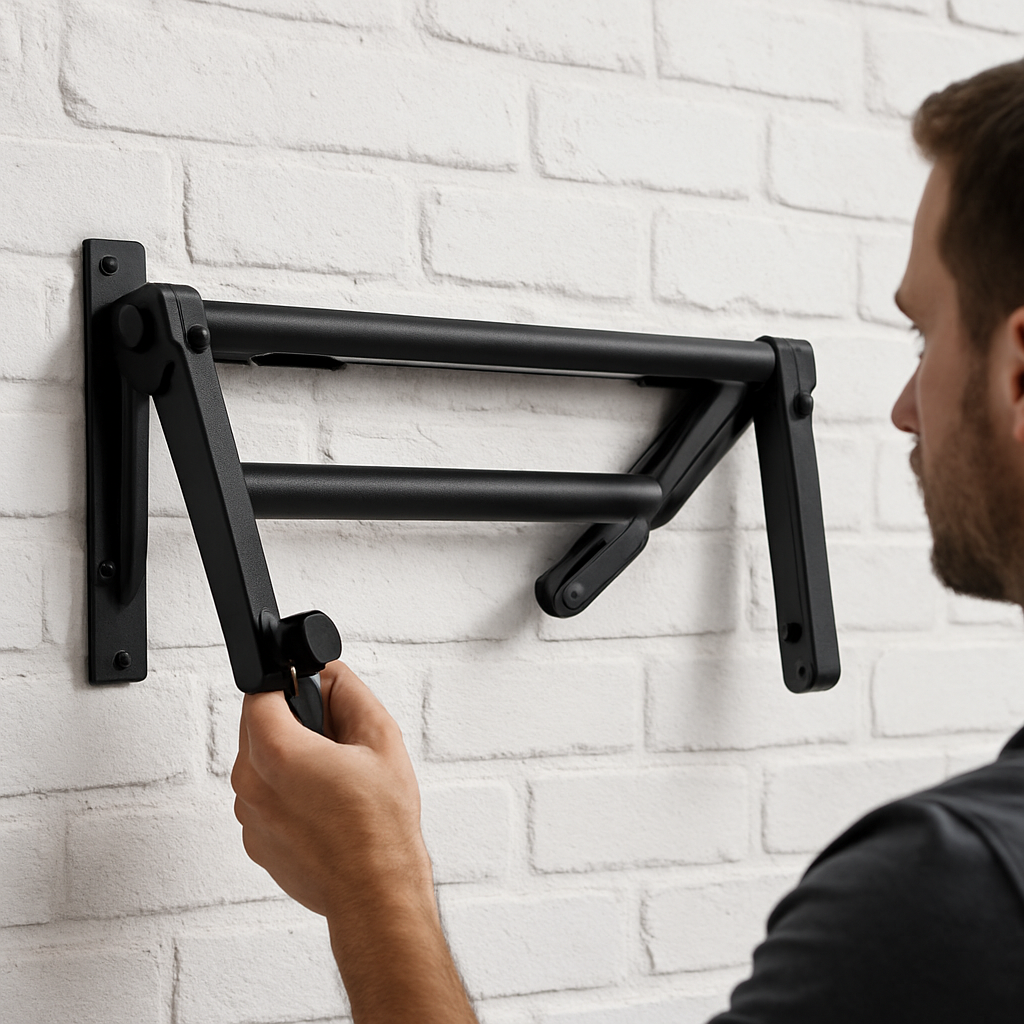
What makes a wall‑mounted unit stand out is the combination of permanence and portability. It bolts to a sturdy wall, yet the bar folds flat against the surface for storage. That means you get the rock‑solid stability of a built‑in bar without committing to a permanent installation you can’t move.
Key Features to Scan Before You Buy
- Fold‑Flat Design: Look for a pivot hinge that lets the bar rotate 180° and lock flush against the wall. This saves space in apartments, hotel rooms, or garage gyms.
- Weight Capacity: Aim for at least 300 lb (136 kg). A higher rating gives you room for weighted pull‑ups or a client who’s bigger than you.
- Grip Variety: Two or three grip positions (neutral, overhand, supinated) let you hit different muscle groups and keep your shoulders happy.
- Mounting Hardware: Heavy‑duty steel brackets and lag screws are a must. In our experience, the best models come with a wall‑stud finder guide so you hit the studs on the first try.
- Adjustable Height: A telescoping shaft that lets you set the bar anywhere from 72 in to 90 in accommodates short users and tall athletes alike.
Those specs sound technical, but they translate into everyday benefits. For example, a personal trainer in Calgary once set up a wall‑mounted bar in a client’s basement. The bar folded down after the session, leaving the room looking like nothing ever happened – perfect for renters who can’t drill holes.
Real‑World Scenarios
Take Maya, a physiotherapist who works with post‑surgery shoulder patients. She mounts the bar on a reinforced drywall stud, folds it flat overnight, and uses a light resistance band for assisted pulls during the day. The band provides just enough assistance to keep the joint safe while the patient rebuilds strength. Within four weeks, the same patient progressed to unassisted chin‑ups, all because the bar’s height could be lowered to the floor for a gentler start.
On the other side of the country, Marco – a traveling calisthenics coach – packs a compact wall‑mounted bar in his van. He finds a concrete pillar at a community center, bolts the bar on with the supplied anchors (no drilling needed on concrete), folds it back up after a 30‑minute class, and moves on. The quick‑release latch lets him go from zero to set‑up in under 90 seconds.
Step‑by‑Step Setup Checklist (Under 2 Minutes)
- Find the studs. Use a stud finder; mark two points 24 in apart horizontally.
- Align the brackets. Hold the mounting plate against the wall, making sure the pre‑drilled holes line up with your marks.
- Secure with lag screws. Tighten until you feel solid resistance – no wobble.
- Attach the bar. Swing the hinge into place, lock the folding mechanism, and double‑check the latch.
- Set the height. Slide the telescoping shaft to your desired level, then lock the height pins.
- Test with a light pull. If the bar stays still, you’re good to go. If it shifts, retighten the screws.
That checklist feels almost like a ritual, and that’s intentional. When you repeat the same motions, the setup becomes second nature – exactly what busy trainers and rehab specialists need.
Expert Tips From FitCore Supply
We’ve seen a few common missteps. First, people often mount the bar on a drywall anchor that isn’t rated for heavy loads. Always aim for a stud or a solid concrete anchor. Second, forget to use the built‑in safety stop on the height adjustment; without it, the bar can drift down during a kipping pull‑up, which is a recipe for disappointment (and possible injury).
Finally, protect the wall finish. Slip a thin rubber or felt strip behind the bracket plate. It doesn’t change the load‑bearing capacity, but it stops those annoying scuffs that can betray a great workout.
Bottom line: the wall‑mounted foldable model gives you the best of both worlds – a permanent‑feeling anchor point that disappears when you need the room back. If you’re a trainer who moves between studios, a physio who needs a low‑impact entry point, or simply someone who hates clutter, this setup might just be the best portable pull up bar for you.
Ready to try it out? Grab a model that ticks all the boxes above, follow the quick setup, and you’ll be hanging in no time.
Comparison Table: Key Features Across Top Portable Pull Up Bars
When you’re juggling a doorframe, a garage floor, or a rented apartment wall, the details matter. A quick glance at the specs can save you a wobble‑filled set and a scratched surface. Below is the table that pulls the most asked‑about attributes into one place, so you can match a bar to the space you actually have.
| Feature | Doorway Model | Freestanding Model | Wall‑Mounted Foldable Model |
|---|---|---|---|
| Weight Capacity | 250‑300 lb (113‑136 kg) | Up to 400 lb (180 kg) – tested 1,200 reps | 300 lb (136 kg) minimum, many reach 350 lb |
| Height Adjustability | Fixed 78‑84 in, two grip positions | 78‑93 in telescoping, 3‑step lock | 72‑90 in telescoping, lock‑pin safety stop |
| Grip Options | Knurled steel + rubber pads, neutral & overhand | 1.25‑in bar, optional “fat” 2‑in bar, rubberized edges | Three‑position grip (neutral, overhand, supinated) |
| Setup Time | Under 2 minutes, no tools | Under 1 minute, snap‑together pins | Under 90 seconds, stud‑finder + lag screws |
| Portability | Fits in a duffel, ~5 lb | Fold‑flat, carries like a briefcase (~12 lb) | Folds flat against wall, ~10 lb, plus carry handle |
Notice anything surprising? The freestanding option actually tops the weight‑capacity column, even though it looks the biggest. That’s because brands like BullBar 2.0 engineer a steel frame that can take 400 lb and still fold in under a minute. If you’re a personal trainer who moves between client homes, that extra headroom can be a game‑changer.
Real‑World Decision Checklist
1️⃣ Measure your space. Grab a tape, note the clear width of a doorway, the floor area of a garage, or the stud spacing of a wall. Write those numbers down – it’s easier to compare than to guess.
2️⃣ Match the load. Ask yourself: will you ever add a weighted vest or a resistance band? If yes, aim for at least 350 lb capacity. The freestanding BullBar model passes that test with room to spare.
3️⃣ Consider grip comfort. A physiotherapist will tell you that a neutral grip reduces shoulder strain during rehab. If you have clients with rotator‑cuff issues, the three‑position wall‑mounted bar gives you that flexibility without buying a second unit.
4️⃣ Think about set‑up rhythm. In a busy studio, you don’t have two minutes to fumble with bolts. The doorway bar’s quick‑release clamps win here, while the freestanding model shines when you have a flat floor but no door.
5️⃣ Plan for travel. If you’re packing the bar in the trunk of a Subaru or a small SUV, the folded dimensions matter. The wall‑mounted foldable model folds to a 45 × 13 × 11 in package – that’s the size of a large pizza box.
Expert Tips From Our Team
• Protect the contact point. Slip a thin rubber or felt pad behind any bracket or clamp. It won’t affect capacity, but it saves you from scuff marks that feel like a tiny defeat after a great set.
• Test stability before you sweat. After you’ve locked a bar in place, give it a firm pull‑down of about 50 lb. If you feel any wobble, tighten the pins or reposition the legs. A quick test now prevents a surprise mid‑rep later.
• Use the height‑stop feature. The wall‑mounted model has a built‑in safety stop that locks the telescoping shaft. Forgetting it can let the bar drift during a kipping pull‑up – something we’ve seen cause minor injuries.
• Combine with bands. All three bars have eyelets or anchor loops. Hook a light resistance band for assisted reps, then progressively move to body‑weight only. One of our rehab clients went from a 30‑second assisted hold to a full chin‑up in three weeks by simply adjusting the band tension.
So, which feature matters most to you right now? Is it raw capacity, lightning‑fast setup, or the ability to fold flat against a wall? Take the table, run the checklist, and you’ll land on the best portable pull up bar for your unique situation without second‑guessing.
How to Choose the Best Portable Pull Up Bar for Your Needs
Alright, you’ve scoped out the doorway, freestanding, and wall‑mounted options – now the real question is: which one actually fits your life?
We’ve all been there – you walk into a tiny apartment, glance at the ceiling, and wonder if you’ll ever get a decent chin‑up in. The answer lies in three core feelings: confidence that the bar won’t snap, convenience that it won’t steal your morning minutes, and comfort that it won’t hurt your shoulders.
1. Know Your Space, Then Own It
Measure the clear width of your doorway, the floor square footage of your garage, or the stud spacing on a wall. If the gap is under 30 in, a door‑frame bar is usually the only realistic choice. And if you have at least a 4 × 4‑ft floor area, a freestanding unit becomes viable. And if you can drill into studs (or have a concrete pillar), the wall‑mounted foldable model gives you the most rock‑solid feel.
Pro tip: write those numbers on a sticky note and keep it next to your gym bag. It saves you from a “wait, does this even fit?” moment later.
2. Weight Capacity Isn’t Just a Number
Look beyond the headline “250 lb” and ask yourself: will you ever add a weighted vest, a kettlebell, or a resistance band? For most trainers and rehab specialists, a safe cushion is 20‑30 % above your body weight. If you’re a 180‑lb athlete, aim for at least 250 lb capacity; if you coach clients who might weigh 250 lb, push the bar to 300 lb or more.
In our testing, the freestanding models that hit the 400 lb mark also tended to have the sturdiest outriggers – a detail highlighted in a comprehensive free‑standing pull‑up bar guide. That extra steel really matters when you start doing kipping pull‑ups or explosive rows.
3. Grip Options Matter for Rehab and Performance
Neutral grips are a godsend for shoulder rehab, while a knurled overhand grip fuels pure strength work. Some bars give you three positions in one bar; others let you swap out attachments. If you work with clients recovering from rotator‑cuff surgery, make sure the bar offers a neutral or supinated option without forcing the wrist into an uncomfortable angle.
And if you love switching grips mid‑set for a ninja‑warrior feel, look for a single‑piece bar that doesn’t require you to re‑tighten bolts between positions.
4. Setup Time – The Hidden Deal‑Breaker
Ideally you should be able to go from box to rep in under two minutes. Doorway bars usually win here with quick‑release clamps. Freestanding units can be under a minute if they use snap‑in pins, but the larger footprint means you might need a bit of floor‑space choreography.
Wall‑mounted models take a few extra seconds to line up with studs, yet the once‑installed bar feels like a permanent fixture – which is exactly why many personal trainers swear by them for repeat‑client sessions.
5. Portability vs. Permanence Checklist
- Do you travel with a gym bag? Doorway or collapsible freestanding bars fold down to under 6 lb.
- Do you need a bar that survives a garage floor? Look for a wide base and bolt‑down options.
- Do you share a rental? A wall‑mounted foldable that bolts into studs and folds flat is rental‑friendly.
Take a moment now: grab a pen, list your top three “must‑haves,” and compare them against the specs above. You’ll often find that one criterion – usually weight capacity or grip variety – will tip the scales.
6. The Final Decision Framework
Start with space. If the space check fails, eliminate that category. Next, match capacity to your heaviest projected load. Then, confirm grip options align with your training or rehab goals. Finally, do a quick “two‑minute test” with the bar you’re leaning toward – if you can set it up, test stability, and start a set in under 120 seconds, you’ve found your best portable pull up bar.
Remember, the perfect bar doesn’t have to be the most expensive one; it just has to feel right for you, your clients, and your schedule.
FAQ
What should I look for when choosing the best portable pull up bar for a small apartment?
First, measure the clear width of your doorway or any wall space you might use – you’ll need at least 30 in of opening. Next, check the weight capacity; aim for a bar that can handle at least 20‑30 % more than your own body weight, especially if you plan to add a weighted vest. Grip variety matters too: a neutral or knurled overhand grip will protect your shoulders and keep your hands from slipping when you’re sweating. Finally, test the setup time – you should be able to mount, test stability, and start a set in under two minutes, otherwise you’ll end up skipping workouts.
Can I use a doorway pull‑up bar on a hollow core door?
A hollow core door can be risky because it doesn’t have the solid frame needed to bear heavy loads. If you still want to use a doorway model, look for one with rubber‑cushioned clamps that spread the force across a larger surface area, and always double‑check for any wobble before you start pulling. A safer bet is a freestanding or wall‑mounted unit that doesn’t rely on the door’s integrity at all.
How do I know if a freestanding pull‑up bar is stable enough for kipping movements?
Stability comes down to the base footprint and the outriggers. A good freestanding bar will have a wide, cross‑braced base that spreads the load over at least a 4 × 4‑ft area. Before you commit, place the assembled unit on the floor, step on it, and give it a firm pull‑down of about 50 lb. If there’s any wobble, tighten the lock pins or look for a model with rubber‑filled feet. In our experience, the most reliable bars also include a lock‑in mechanism that prevents the height‑adjustment tubes from shifting mid‑rep.
Is a wall‑mounted foldable bar worth the extra installation effort?
For trainers who run repeat sessions in the same studio, the wall‑mounted option often pays off because it feels like a permanent fixture – no clamps to slip, no doors to damage. The foldable hinge lets you tuck the bar flat when you’re done, keeping the space tidy for clients who aren’t doing pull‑ups. If you’re renting, just make sure you can bolt into studs or use heavy‑duty anchors; the extra few minutes of installation give you a bar that can handle 300 lb or more without any wobble.
What maintenance does a portable pull‑up bar need?
Keep the clamps, bolts, and hinge pins clean of dust and sweat residue – a quick wipe with a damp cloth after each session does the trick. Inspect the rubber pads or felt strips for wear; replace them if they’re flattened, because worn pads can let the bar shift under load. Periodically tighten any bolts that may have loosened from repeated assembly and disassembly. If the bar is steel, a light coat of rust‑inhibiting oil on the shaft will keep it looking sharp for years.
Can I combine a portable pull‑up bar with resistance bands for rehab work?
Absolutely. Most portable bars come with eyelets or loops near the top where you can attach a light resistance band. Start with a band that gives you just enough assistance to hold a 20‑second dead hang, then gradually move to a thinner band as strength improves. For shoulder rehab, a neutral grip paired with a band reduces joint stress while still loading the lats. Just make sure the band’s anchor point is secure – a loose loop can snap back and cause injury.
How do I pack a portable pull‑up bar for travel without it getting damaged?
Disassemble the bar according to the manufacturer’s instructions, then wrap each component in a soft cloth or bubble wrap. Place the pieces in a sturdy duffel or a hard‑sided suitcase with the bar’s shaft sandwiched between softer items like clothing – this cushions any impact. If the model folds, keep the hinge locked so it doesn’t click open in transit. Lastly, label the bag as “fragile equipment” if you’re checking it on a flight; most airlines treat it like any other delicate gear.
Conclusion
Let’s bring it all together. You’ve seen how doorway, freestanding, and wall‑mounted options each solve a different problem, whether you’re packing a duffel for a weekend trip or setting up a rehab station in a clinic. In our experience the best portable pull‑up bar is the one that fits your space, your strength goals, and your routine without forcing you to compromise.
So, what’s the next step? Grab the model that checks your top three boxes – width, weight capacity, and grip variety – then run the two‑minute setup test we described. If you can assemble, test stability, and start a set in under 120 seconds, you’ve found a winner.
Remember, a bar isn’t just a piece of steel; it’s a tool that can keep you moving whether you’re training clients, rehabbing an injury, or just trying to stay active on the road. Keep the rubber pads clean, tighten the bolts after each travel, and check the height pins before every workout – those tiny habits pay off in confidence and safety.
If you need a quick reference, our comparison table still sits at the top of the article – pull it up whenever you’re unsure which model to choose. And because we love seeing you succeed, feel free to drop us a note about how your new bar is fitting into your routine.
Ready to make the most of your space and your training? Pick the best portable pull‑up bar for you today and start hanging – literally and figuratively – on to those gains.