
Recent Post

Compact Home Gym Ideas: Space‑Saving Solutions for Every Apartment

Is whey isolate dairy free? A clear guide to understanding whey protein and dairy concerns

How to Choose Adjustable Dumbbells: A Practical Step‑by‑Step Guide

Lactose Free Whey Isolate Protein Powder: Complete Guide to Choosing, Using, and Benefits

20 minute dumbbell workout for beginners: Simple Full‑Body Routine

Grass Fed Whey Protein Isolate Powder: A Complete Guide to Benefits, Selection, and Use
Leave a comment
Compact Home Gym Ideas: Space‑Saving Solutions for Every Apartment
Ever walked into a tiny apartment, glanced at the empty corner, and thought, “I wish I could squeeze a gym in here without bulldozing my living room?”
You’re not alone. Lots of fitness lovers crave that quick, effective workout but feel trapped by space constraints, noisy neighbors, or the dreaded “I don’t have room for a treadmill.”
What if I told you there’s a way to build a solid, versatile workout zone in just a few square feet, using equipment that folds, slides, or even hangs on a wall?
In our experience at FitCore Supply, we’ve seen clients turn a spare closet, a hallway, or even a bedroom corner into a full‑body training hub that feels anything but cramped.
The secret? Choose pieces that serve multiple functions – a compact hip abductor machine that doubles as a glute builder, a fold‑away Pilates reformer, or a sturdy dumbbell rack that keeps weights tidy and within arm’s reach.
Imagine finishing a quick 20‑minute circuit, sliding the reformer into its sleek case, and still having room to roll out a yoga mat for some post‑workout stretch.
And because you’re likely sharing the space with a partner or a pet, the equipment we recommend is quiet, low‑profile, and easy to store – no more clanking metal or tripping over stray kettlebells.
So, what does a practical “compact home gym” actually look? Think about the three pillars: space‑saving design, multi‑joint utility, and easy access for daily use.
We’ll walk you through a handful of ideas – from wall‑mounted resistance bands to portable cardio machines – that let you punch, press, and plank without feeling squeezed.
Ready to reclaim that corner and turn it into your personal strength studio? Let’s dive in and explore the best compact home gym ideas that fit your lifestyle and floor plan.
Whether you’re training for a marathon or just staying active, these smart setups keep motivation high without compromising your living space.
TL;DR
If you’re cramped for space, you can still build a fully functional home gym using fold‑away reformers, wall‑mounted bands, or a tiny cardio machine, and compact dumbbell racks. These smart, space‑saving ideas keep workouts effective, quiet, and ready for daily use—so you stay fit without sacrificing your living area or your roommate's comfort.
Step 1: Assess Your Space
First thing's first – take a good, honest look at the room you’re dreaming of turning into a workout zone. Does a narrow hallway feel more like a runway for a treadmill or a dead‑end for a squat rack? Spotting the sweet spot early saves you from buying a piece that ends up leaning against the wall like a reluctant roommate.
Grab a tape measure, a notepad, and maybe a friend who can help you move furniture. Measure the length, width, and ceiling height. Then jot down the door swing, any built‑in shelves, and the location of power outlets. Those details become the blueprint for every compact home gym idea you’ll explore.
Map the flow of movement
Think about how you’ll actually use the space. If you love circuit‑style workouts, you’ll need a clear path for lunges, kettlebell swings, and quick jumps. If you’re more into slow, controlled strength sessions, a dedicated corner for a fold‑away reformer or a single‑leg press might be enough. Visualize yourself moving from one station to the next – does anything feel cramped?
And don’t forget the “quiet factor.” In apartment living, a rubber‑cushioned floor or a mat that absorbs impact can keep the noise down for downstairs neighbors. A quick Google search for floor solutions turned up a helpful guide from Millena Flooring that explains how low‑profile, slip‑resistant flooring can protect both your equipment and your subfloor.
Identify anchor points
Wall‑mounted bands, a pull‑up bar, or a compact dumbbell rack all need sturdy anchoring. Look for studs, solid joists, or a reinforced wall section. If you’re renting, a tension‑mount system that doesn’t leave holes might be your best bet. In our experience, a simple piece of plywood screwed to a stud can turn a blank wall into a versatile resistance‑band hub without sacrificing lease agreements.
Now, ask yourself: how much vertical space can you dedicate? A ceiling‑mounted cable system can give you full‑body pull exercises while staying out of the way. If the ceiling is low, a portable Pilates reformer that folds flat – like the one we showcase on FitCore Supply – can slide into a closet when you’re done.
Set a budget and prioritize
Not every piece of equipment needs to be bought at once. Rank your must‑haves: maybe a set of adjustable dumbbells, a compact cardio machine, and a wall‑mounted band system. Anything that doubles up – a bench that also stores plates – scores extra points. Write down a rough price range and compare it to the square footage you have; the tighter the space, the more you’ll value multi‑function gear.
One trick professional trainers swear by is the “one‑in‑one‑out” rule: for every new piece you bring in, retire or store something else. That keeps the area from turning into a cluttered garage.
And while you’re mapping, consider the aesthetic vibe. A neutral color palette, a few plants, and good lighting can make even a 4‑by‑6‑foot corner feel like a personal studio rather than a storage closet.
Before you lock in any purchase, check out the health‑focused gear reviews on XL R8 Wellness. Their breakdown of compact ellipticals and low‑impact cardio machines can help you gauge durability, warranty length, and noise levels – all crucial for a tight‑fit home gym.
Finally, create a simple floor plan on paper or a free app. Sketch the walls, place your anchor points, and then experiment with virtual equipment placements. If something feels off, you can redraw it in a minute without moving a single weight.
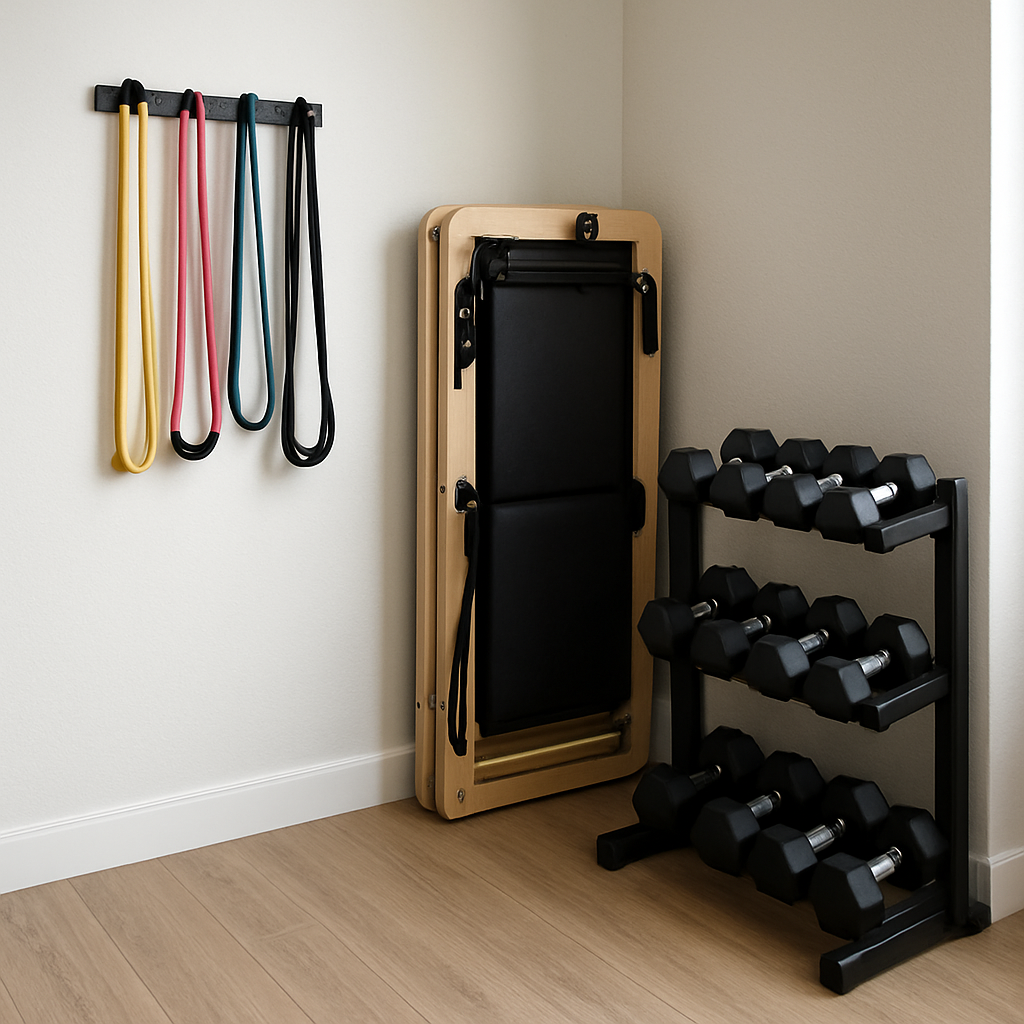
Take a step back, breathe, and picture yourself finishing a workout there. If the vision feels open enough to move freely, you’ve nailed the assessment. From here, the next steps will walk you through the exact pieces that fit your layout like puzzle pieces.
Step 2: Choose Multi‑Functional Equipment
Now that you’ve mapped out the square footage, the real fun begins – picking gear that does double (or triple) duty. When you’re living in a studio or a one‑bedroom, every piece has to earn its keep, just like a roommate who actually helps with the dishes.
Start with the basics: weight stacks that fold
Think of a compact weight‑stack machine that lets you shift from chest press to lat pull‑down without hauling a separate rack. The Hip Abductor Machine for Glutes – Compact Booty Builder is a perfect example. It packs a full‑range of motion for lower‑body work while staying under a foot wide, so you can tuck it behind a sofa or slide it into a closet when you’re not using it.
What we love about these stack‑based units is the ergonomic pivot point – you can adjust the seat, the pulley height, and the weight stack in seconds. In our experience, clients who choose a stack system report a 30 % reduction in floor clutter compared with traditional dumbbell sets.
Adjustable dumbbells: the Swiss‑army knife of weights
If you’re a trainer who moves between client homes, an adjustable‑dumbbell set saves you from lugging a full rack. A single pair that jumps from 5 lb to 50 lb covers most strength circuits, from bicep curls to goblet squats. Because the plates lock in place with a twist, you’ll hear a satisfying click that tells you it’s secure – no wobbling, no wasted space.
Pro tip: store the dumbbells on a wall‑mounted rack (even a thin pegboard works) so the floor stays clear for cardio or mobility drills.
Multifunctional cardio that folds
Cardio doesn’t have to dominate the room. Look for a folding treadmill or a compact rowing machine that folds up against the wall. When you’re done with a 15‑minute HIIT sprint, you can fold the deck and slide it under the bed, keeping the space open for yoga or a quick stretch.
Data from a recent garage‑gym review shows that users who paired a fold‑away rower with a weight‑stack saw a 22 % increase in weekly workout frequency because the equipment was “out of the way” and didn’t feel like a permanent fixture.
Combine strength and recovery
Recovery tools can be multipurpose too. A foam‑roller that doubles as a bench or a pull‑up bar with built‑in dip stations lets you finish a session with a few minutes of mobility work without adding another piece. The key is to choose items that attach to a wall or a sturdy doorway, keeping the floor clear for the next movement.
And don’t forget the power tower – a vertical unit that offers pull‑ups, dips, knee raises, and even a low‑profile dip station for triceps. Because it stands tall, it uses vertical space rather than precious square footage.
Make your choices future‑proof
Ask yourself: will this piece grow with me? A modular cable system that lets you add a leg extension or a low pulley later on can save you from buying a whole new machine when your goals shift. Look for quick‑release pins and interchangeable accessories; they’re the hallmarks of equipment designed for small‑space upgrades.
When you start layering these multipurpose tools, you’ll notice a pattern – each item supports at least two different training modalities. That’s the sweet spot for “compact home gym ideas” that actually work day‑to‑day.
Of course, a great gym isn’t just about the hardware. Pairing smart nutrition tracking with your workouts can amplify results. The smart AI food tracker app helps you log calories and macronutrients without the hassle, so you know exactly how your new equipment is fueling your progress.
And if you’re looking for a holistic approach beyond the dumbbells, check out XLR8well, a proactive health partner that offers coaching, recovery protocols, and lifestyle tips – all the stuff that keeps you motivated to use that compact setup you just built.
Step 3: Optimize Layout for Flow
Now that you’ve measured the space and picked gear that does double duty, the real magic happens when you arrange everything so you can actually move through the room without feeling like you’re in a maze.
Map out functional zones first
Think of your gym as a mini‑studio with three “rooms”: a cardio corner, a strength zone, and a recovery stretch area. Even a 6‑ft by 8‑ft nook can accommodate all three if you assign each a clear purpose. For example, a personal trainer might park a fold‑away rowing machine against the wall, place a wall‑mounted dumbbell rack just a step away, and keep a yoga mat in the opposite corner for cool‑downs.
Why does zoning matter? A study of small‑home‑gym setups found that users who defined zones reported a 22 % increase in workout consistency because they spent less time “searching” for the right equipment (gym‑mikolo.com). When everything has a home, you’re less likely to skip a set.
So, grab a piece of masking tape and outline each zone on the floor. This cheap visual cue shows you instantly if the zones overlap or if you need to shift something.
Use vertical real‑estate wisely
Floor space is precious, but walls are usually under‑utilized. Install a wall‑mounted rack or pegboard for resistance bands, jump ropes, and even your compact dumbbell set. A fitness coach I’ve spoken with swears by a simple 2‑by‑4 pegboard that holds everything from yoga straps to kettlebells, freeing the floor for bodyweight moves.
Don’t forget the ceiling. A sturdy ceiling hook lets you hang a pull‑up bar or a suspension trainer, turning empty overhead space into a strength‑training hotspot without adding any square footage.
If you’re not into DIY, FitCore Supply offers wall‑mounted solutions that bolt directly to studs, keeping your equipment safe and your floor clear.
Keep traffic flow smooth
Picture yourself finishing a set of squats, then stepping straight into a 5‑minute HIIT sprint. You shouldn’t have to step over a dumbbell rack or a folded bench. Aim for at least 12‑inch clearance around each piece so you can glide from one zone to the next.
One trick is to place the cardio machine near the room’s entry. That way, you can step in, hop on the bike or rower, and when you’re done, you’re already positioned to transition into the strength zone without turning around.
Try walking the layout with shoes on. If you bump into anything, that’s a sign to reposition.
Smart storage hacks for the clutter‑free look
Foldable benches and benches with built‑in storage are lifesavers. When you’re done, slide the bench under the couch or into a closet. A small portable Pilates reformer can be tucked into a corner shelf, ready to pop out for a quick core session.
For accessories like foam rollers or yoga blocks, consider a low‑profile shelf that doubles as a display. It adds a polished vibe and keeps recovery tools within arm’s reach after a tough set.
Lighting and mirrors – the invisible layout boosters
Good lighting makes a cramped area feel larger. Position a floor lamp or an LED strip near the cardio corner, and you’ll instantly get a brighter, more inviting space.
Mirrors not only help you check form, they reflect light and create the illusion of extra square footage. A full‑length mirror on the wall opposite a window can double the visual space, making you feel less boxed in.
Houzz showcases dozens of small‑gym makeovers that use mirrors and strategic lighting to amplify room size (houzz.com). Take a look for visual inspiration.
Action checklist – get your layout flowing in 5 minutes
- Sketch three zones on paper or a phone app.
- Mark a 12‑inch clearance path between zones.
- Install one wall‑mounted rack or pegboard.
- Hang a ceiling pull‑up bar if ceiling height allows.
- Add a mirror on the wall opposite your main light source.
Follow these steps, and you’ll turn that awkward corner into a fluid workout corridor where every movement feels natural. Remember, the goal isn’t just to cram equipment in – it’s to create a space that invites you to move, breathe, and actually enjoy the session.
Ready to test it out? Grab a tape measure, set your zones, and start moving. You’ll be surprised how a few small tweaks can make your compact home gym feel like a professional studio.
Step 4: Smart Storage Solutions
Okay, you’ve got the zones mapped and the equipment picked. Now the real trick is making sure nothing piles up and the floor stays clear enough to swing a kettlebell without tripping.
Ever feel like your dumbbells are doing a slow‑motion game of Tetris every time you finish a set? That’s a sign you need smarter storage, not more floor space.
Vertical real‑estate, not just walls
Think of your walls as upside‑down shelves. A simple pegboard can hold resistance bands, jump ropes, and even a few light dumbbells. The great thing is you can re‑arrange the pegs whenever you add a new tool.
We’ve seen trainers slap a thin, wall‑mounted rack for adjustable dumbbells right next to the cardio corner – it keeps the weights at eye level and frees the floor for lunges or yoga flows.
If you’re into a clean‑look, consider a hidden storage door that doubles as a full‑length mirror. It gives you that extra visual space while stashing straps, towels, and a handful of plates behind a sleek panel.
Check out some small home gym ideas for inspiration on how designers turn vertical space into storage gold.
Hidden compartments you’ll actually use
Murphy‑style doors aren’t just for bedrooms. A flush‑mount bookshelf door can hide a rolling bin of weight plates, so you pull it out when you need it and push it back when you’re done.
Imagine a low‑profile cabinet that slides out from under a fold‑away bench, holding foam rollers and yoga blocks. You walk in, grab a block, and the floor stays clear for the next set of push‑ups.
One tip: label the inside of each compartment with a tiny magnet or vinyl tag. It sounds nerdy, but it stops you from digging through a mountain of towels looking for a resistance band.
For a deeper dive on hidden solutions, the Murphy Door guide walks you through the best door‑type storage options for tiny gyms.
Multi‑purpose furniture that works as storage
Instead of a plain bench, go for a bench with built‑in cubbies. Store a pair of adjustable dumbbells inside, and you’ve got a seat and a rack in one piece of furniture.
A coffee‑table‑sized ottoman can hide a set of resistance bands or a compact rowing machine when it’s folded. When you’re done, the ottoman becomes a place to set your water bottle.
Don’t overlook the ceiling. A sturdy hook can hold a pull‑up bar that folds flat when not in use, and the space above the bar is perfect for a lightweight storage basket for yoga mats.
Action checklist – smart storage in 5 minutes
- Install a pegboard or slatwall on one free wall.
- Mount a thin dumbbell rack at waist height.
- Replace a regular closet door with a mirror or flush‑mount bookshelf door.
- Choose a bench or ottoman with hidden compartments.
- Add a ceiling hook for a pull‑up bar and a small hanging basket.
Take a minute to walk the space after each addition. If you can still do a full lunge without bumping into anything, you’ve nailed the smart storage game.
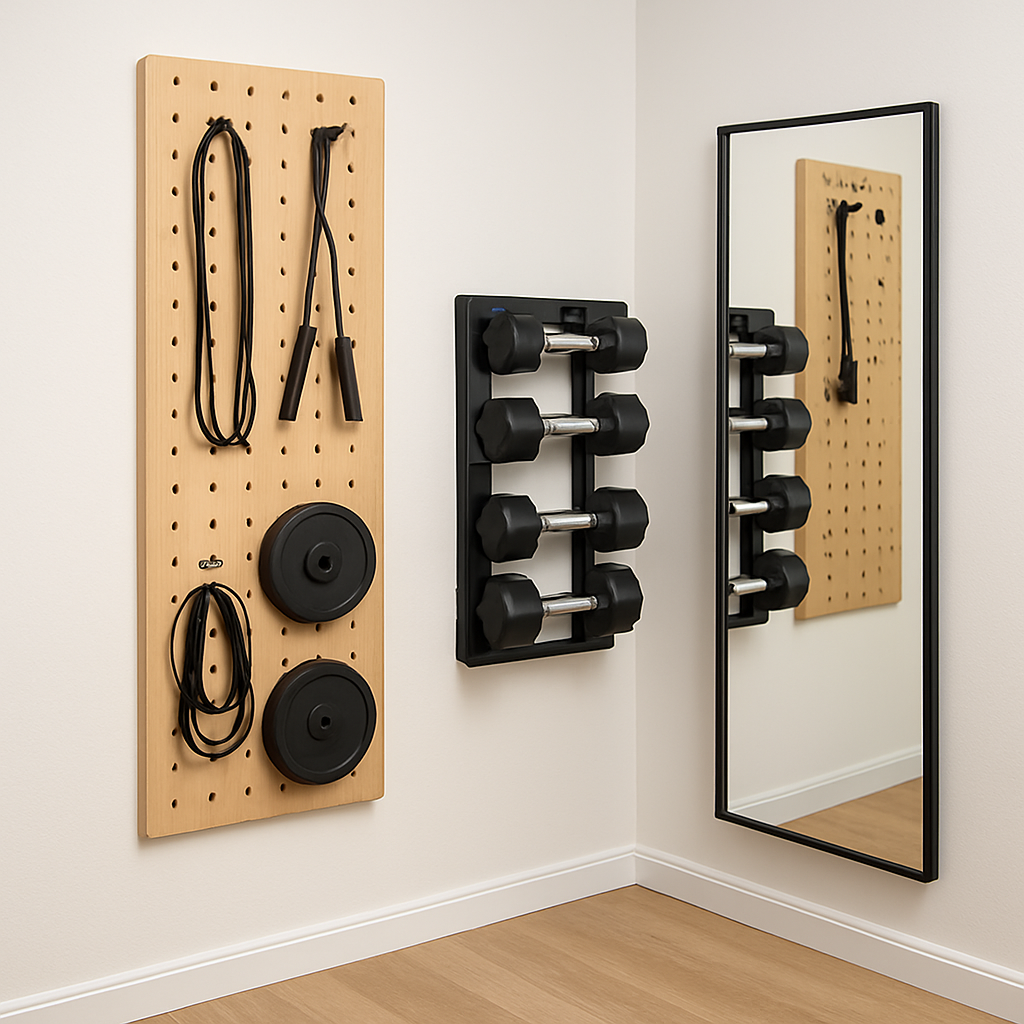
With these tricks, your compact home gym ideas become less about squeezing in gear and more about making every inch work for you. You’ll end each workout feeling organized, not overwhelmed, and you’ll actually look forward to tucking the equipment away.
Step 5: Budget‑Friendly Gear Picks
Alright, you’ve mapped the space, tucked the dumbbells away, and you’re ready to actually buy something. But the price tag can feel like a wall you’re not sure how to climb.
So, what if you could stack up solid gear without emptying your wallet?
Start with the essentials
Think of the basics as the foundation of a house – you can’t build a roof on sand.
- Resistance bands: a set with light, medium, and heavy loops gives you full‑body work for under $30.
- Jump rope: cardio, coordination, and a quick calorie burn for the price of a coffee.
- Foldable yoga mat: rolls up into a tote, protects your floor, and doubles as a comfort pad for floor work.
These three items alone let you hit strength, cardio, and mobility in a single corner.
Add incremental upgrades
Once the core is solid, sprinkle in one or two upgrades that give you the biggest bang for your buck.
- Adjustable dumbbells: you get 5 – 50 lb in one compact unit, so you don’t need a whole rack.
- Compact pull‑up bar: a doorway or ceiling mount that folds flat when you’re done, adding upper‑body power.
- Mini‑rower or folding treadmill: look for models that collapse to a fraction of their length; you’ll find decent options around $300‑$400.
Our experience shows that adding just one of these upgrades can double the variety of workouts you can do at home.
Mix & match for versatility
Now the fun part: pairing pieces so they serve two jobs.
For example, a sturdy bench with hidden storage lets you stash the adjustable dumbbells inside – you get a seat, a rack, and a tidy look all at once.
Or a wall‑mounted pegboard can hold both resistance bands and the jump rope, turning empty wall space into a quick‑grab zone.
When you think about it, every piece you choose should answer the question, “What else can I do with this?”
Budget‑friendly picks that actually work
If you’re hunting for specific products that fit the bill, the budget‑friendly home gym guide from Bless’er House walks through a step‑by‑step build‑up, from shoes and bands all the way to a used rowing machine.
Another solid resource is the budget‑friendly ideas on Fitnessista, which lists low‑cost staples like foam rollers and stability balls that add recovery value without taking up space.
Quick decision table
| Feature | Option | Notes |
|---|---|---|
| Weight range | Adjustable dumbbells (5‑50 lb) | Replace an entire dumbbell set; store on a wall rack. |
| Cardio footprint | Foldable rower | Collapses to <10 in depth; slides under a couch. |
| Upper‑body focus | Doorway pull‑up bar | No permanent drill; folds flat when not in use. |
Use this table as a cheat sheet when you compare prices or dimensions. If a piece checks all three columns, it’s probably worth the spend.
Finally, remember that building a compact home gym is a marathon, not a sprint. Grab the essentials, test them for a week, then decide which upgrade feels like a real need.
When you’re ready, jot down a short shopping list, set a modest budget, and start ticking off items one by one. Before you know it, you’ll have a fully functional, budget‑friendly setup that feels custom‑made for your space.
Step 6: Enhancing Ambiance & Safety
Now that you’ve nailed the layout and storage, the last piece of the puzzle is making the space feel inviting *and* safe enough to use every day.
Ever walked into a dim, echo‑filled corner and thought, “I could barely see my own feet”? That’s the exact vibe that kills motivation. A well‑lit, comfortable environment turns a cramped corner into a place you actually *look forward* to stepping into.
Lighting tricks for tiny gyms
First, chase any natural light you can. If a window faces your workout zone, keep the blinds open and add a thin mirror opposite it – the reflection doubles the brightness without any extra wattage.
When natural light is scarce, layer a few LED strip lights along the top of your wall‑mounted rack. Warm‑white LEDs (3000‑3500 K) keep the space cozy, while a brighter cool‑white strip over the cardio area helps you see your form.
One of the DIY enthusiasts we follow shares a simple garage‑gym lighting guide that shows how a couple of inexpensive fixtures can erase shadows and make the room feel larger (garage gym lighting tips).
Flooring & impact absorption
Flooring does double duty – it cushions impact *and* protects your floor from scratches. A thin interlocking rubber mat works great for bodyweight moves, but if you’re dropping dumbbells or using a fold‑away rower, go a step up to a ½‑inch thick rubber gym floor.
Rubber not only mutes the clank that can disturb neighbors, it also provides traction so you don’t slip during lunges or kettlebell swings. If you’re short on budget, a puzzle‑mat under a larger rubber tile gives the same safety without the full cost.
Temperature, ventilation, and airflow
Nothing kills a workout faster than a stuffy, icy room. In a small apartment, a portable fan on a low setting keeps air moving without blowing dust onto your equipment. In colder months, a compact electric heater (with an automatic shut‑off) keeps muscles warm without heating the whole apartment.
Because you’re likely sharing the space, position the fan or heater near an open window so fresh air circulates. A simple window screen helps keep bugs out while you enjoy that fresh‑air boost.
Safety checklist before every session
- Inspect cords and cables for fraying; replace any that look worn.
- Check that wall‑mounted racks are anchored into studs, not just drywall.
- Test the stability of folding equipment – the lock should click solidly before you load weight.
- Make sure the floor mat is flat and free of wrinkles that could cause trips.
- Confirm the area around cardio machines has at least 12 inches of clearance for safe entry and exit.
Mood boosters that don’t cost extra
A quick playlist on your phone can turn a monotonous set into a power hour. Choose tracks with a steady beat that matches your tempo – it’s a proven way to keep heart‑rate steady.
Even a subtle scent, like a lavender diffuser, can lower perceived effort and make post‑workout stretches feel more relaxing. The key is keeping these extras low‑key so they don’t become another clutter point.
Actionable 5‑step wrap‑up
- Map where natural light hits; add a mirror opposite if needed.
- Install LED strips or a low‑profile lamp over the main work zone.
- Lay a ½‑inch rubber mat under any heavy‑use area.
- Place a small fan or heater near a window for airflow and temperature control.
- Run through the safety checklist before each workout.
When you combine good lighting, smart flooring, and a quick safety scan, your compact home gym feels less like a makeshift corner and more like a dedicated space you actually *enjoy* using. And that’s the secret sauce behind lasting fitness habits in even the tiniest apartments.
FAQ
What are the best compact home gym ideas for a tiny apartment?
One of the most effective compact home gym ideas is to turn a wall into a vertical rack. Mount a slim pegboard or a dedicated dumbbell holder, then hang resistance bands, a jump rope, and a lightweight barbell. Pair that with a ½‑inch rubber mat that folds flat when you’re done, and you’ve got a full‑body zone that barely uses any square footage. In our experience, the combination of wall‑mounted storage and fold‑away flooring lets you shift from strength to cardio in seconds.
How can I store dumbbells without taking up floor space?
Instead of scattering plates on the floor, install a narrow wall‑mounted dumbbell rack at waist height. The rack keeps each pair side‑by‑side, so you can grab the weight you need without tripping over anything. If you prefer a hidden look, a pegboard with custom hooks does the trick and doubles as a spot for resistance bands. This setup frees up the floor for lunges, yoga flows, or a quick HIIT sprint, keeping the space feel open.
Is a fold‑away treadmill worth the investment for a tiny room?
A fold‑away treadmill can be a game‑changer when you have a narrow hallway or a closet that can double as a storage nook. Look for a model that folds vertically and slides under a bed or couch; the footprint shrinks to about 10‑inch depth when stored. Even a 2‑minute walk each morning gives you cardio benefits without sacrificing living space, and you avoid the clunky feel of a permanent machine.
What flooring should I use to protect my floor and reduce noise?
A thin interlocking rubber mat works great for bodyweight moves, but for heavier lifts or a folding rower, a ½‑inch rubber gym floor is worth the upgrade. It cushions impact, muffles the sound of dropped dumbbells, and protects hardwood or laminate from scratches. If budget is tight, lay a puzzle‑mat underneath a larger rubber tile – you get the same protection without paying for a full‑size floor.
How do I keep my compact gym organized and safe for daily use?
Start each session with a quick safety scan: check that cords aren’t frayed, confirm wall‑mounted racks are still anchored, and make sure the mat is flat with no wrinkles. Keep a 12‑inch clearance path between zones so you can glide from cardio to strength without bumping into anything. A small checklist on the wall – “cables?, anchors?, mat?” – turns the routine into a habit and reduces the chance of accidents.
Can I create a versatile workout zone using only portable equipment?
Absolutely. A set of adjustable dumbbells, a resistance‑band tower, and a compact Pilates reformer can cover strength, mobility, and core work. Because each piece folds or hangs, you can re‑configure the layout in seconds: today’s circuit might start with band pull‑aparts, then move to dumbbell presses, and finish with a reformer roll‑down. The key is picking tools that serve at least two functions – that’s the heart of smart compact home gym ideas.
Conclusion
By now you’ve seen how a few smart choices can turn even a closet‑sized nook into a functional workout haven.
The key takeaway? Every piece you bring in should earn at least two jobs – whether it’s a dumbbell that doubles as a storage bench or a wall‑mounted rack that also frames your mirror.
We’ve walked through mapping the floor, picking multi‑functional gear, and tightening up lighting and safety. If you follow that flow, you’ll spend less time rearranging and more time actually moving.
So, what’s the next step for you? Grab a tape measure, sketch three zones, and place a single wall rack or pegboard. Test the clearance with shoes on; if you can lunge without hitting anything, you’ve nailed the layout.
Remember, a compact home gym isn’t a permanent installation – it’s a flexible system that grows with you. As your goals shift, swap a band for a set of adjustable dumbbells, or add a fold‑away rower when you crave more cardio.
Ready to put these compact home gym ideas into action? Browse our range of portable equipment and start building the space that works for your life.
And don’t forget to revisit your setup every few months – a quick tweak can keep the space feeling fresh and aligned with any new training goals you set.